

For architectural and interior design firms, the path to a new client often starts quietly. Someone searches for a designer or architect in their area, scans a few results, and begins forming opinions within seconds. Before they review a portfolio or read an about page, they’re looking for signs of credibility, professionalism, and relevance. Your Google Business Profile plays a critical role in that moment. When it’s incomplete or outdated, it creates friction and doubt. When it’s thoughtful and well-maintained, it supports your reputation before you ever speak to a potential client.
A strong Google Business Profile doesn’t replace a well-designed website or a polished portfolio, but it complements them. It helps Google understand where and how to show your firm in local search results, and it helps prospective clients quickly determine whether you’re worth contacting. For firms that rely on trust, referrals, and long-term relationships, this profile is a foundational piece of your digital presence rather than an optional add-on.
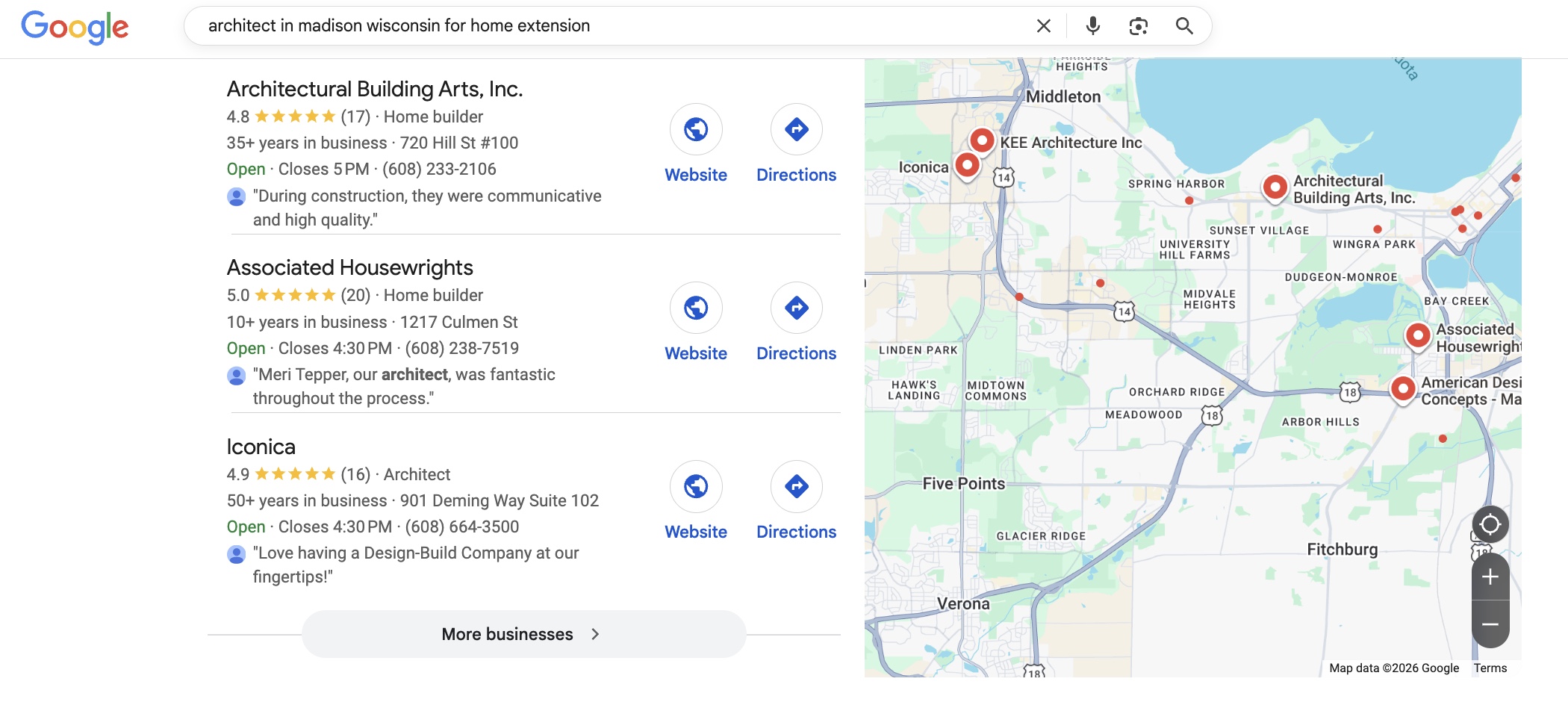
Your Firm’s First Impression in Local Search
When someone searches for an architect or interior designer, they are usually in an evaluation mindset. They are confirming that firms are legitimate, local, and active, often before diving deeper into style or philosophy. Your Google Business Profile can be the first place that evaluation happens. It appears prominently in search results and on maps, presenting key information such as your location, contact details, services, and reviews. In many cases, it shapes the initial perception of your firm more than your website does.
For design firms, this makes your profile feel less like a listing and more like a public-facing introduction. It answers basic questions quickly and removes uncertainty, which is especially important for clients planning significant investments. A complete and accurate profile also helps Google understand what your firm does and who it should be shown to, improving your chances of appearing in relevant local searches. When your profile is clear and intentional, it reinforces your positioning instead of leaving it open to interpretation.
Claiming and Shaping Your Presence on Google
Setting up your Google Business Profile is a relatively straightforward process, but the decisions within it deserve care. It begins by claiming or creating your listing through Google’s business management platform, where you’ll enter your firm’s official name and select the most accurate primary category, such as architect or interior designer. This category choice is more important than it may seem, as it directly affects the types of searches you appear in. You’ll also add your office address or define a service area if you don’t meet clients at a physical office location.
After entering the basics, Google requires verification, typically through a mailed postcard sent to your business address. Once verified, you can complete your profile by adding hours, contact information, services, and a business description. This description should clearly explain what you do, who you serve, and how you approach your work, using plain language rather than internal or technical terminology. Consistency is essential here, as your profile details should match what appears on your website and other directories. When set up thoughtfully, your profile becomes a stable foundation that supports your broader marketing efforts rather than competing with them.
Why Ongoing Maintenance Signals Credibility
A Google Business Profile works best when it reflects the reality of your firm today, not a snapshot from years ago. Firms that keep their profiles updated tend to feel more established and attentive, even to first-time visitors. Simple actions, such as updating hours, refining service descriptions, or adding new project photos, send subtle signals that your firm is active and engaged. Over time, these signals contribute to stronger visibility and greater trust.
Ongoing maintenance also helps prevent small issues from becoming lost opportunities. Outdated information can lead to missed calls, incorrect expectations, or frustrated prospects who move on to another firm. Posting occasional updates, responding to questions, and reviewing your profile periodically helps ensure accuracy and relevance. Treating your Google Business Profile as a living asset rather than a one-time task reinforces professionalism across every client touchpoint.
How Client Feedback Influences Who Reaches Out
Reviews are one of the most influential elements of your Google Business Profile, particularly for architecture and interior design firms. Prospective clients often read them to understand not just project outcomes, but the experience of working with your team. They look for insights into communication, reliability, and problem-solving, using reviews to reduce risk before reaching out. A strong set of thoughtful reviews can help the right clients feel confident taking the next step.
Recency plays a major role in how reviews are perceived. Google favors profiles with ongoing review activity, and users tend to trust feedback that feels current. A profile with many older reviews but little recent activity can appear stagnant, even if the overall rating is high. This makes review generation an ongoing effort rather than a one-time push. Encouraging clients to leave feedback at natural moments in the project lifecycle helps maintain momentum and keeps your profile aligned with your current standards and work. Responding to reviews further reinforces professionalism and shows that your firm values client relationships.
When your Google Business Profile is clear, current, and well-managed, it quietly supports your firm’s growth by improving visibility and building confidence before the first conversation ever happens.
If you want help setting up or refining your profile as part of a stronger digital presence, Projio can help you turn local visibility into more meaningful design opportunities.